Positive reinforcement is one of the most effective ways to teach your dog new behaviours, strengthen your bond, and build their confidence. But what exactly is it, and how can you use it to bring out the best in your dog? Let’s explore how rewarding good behaviour creates a happier, more engaged canine companion.
What is Positive Reinforcement?
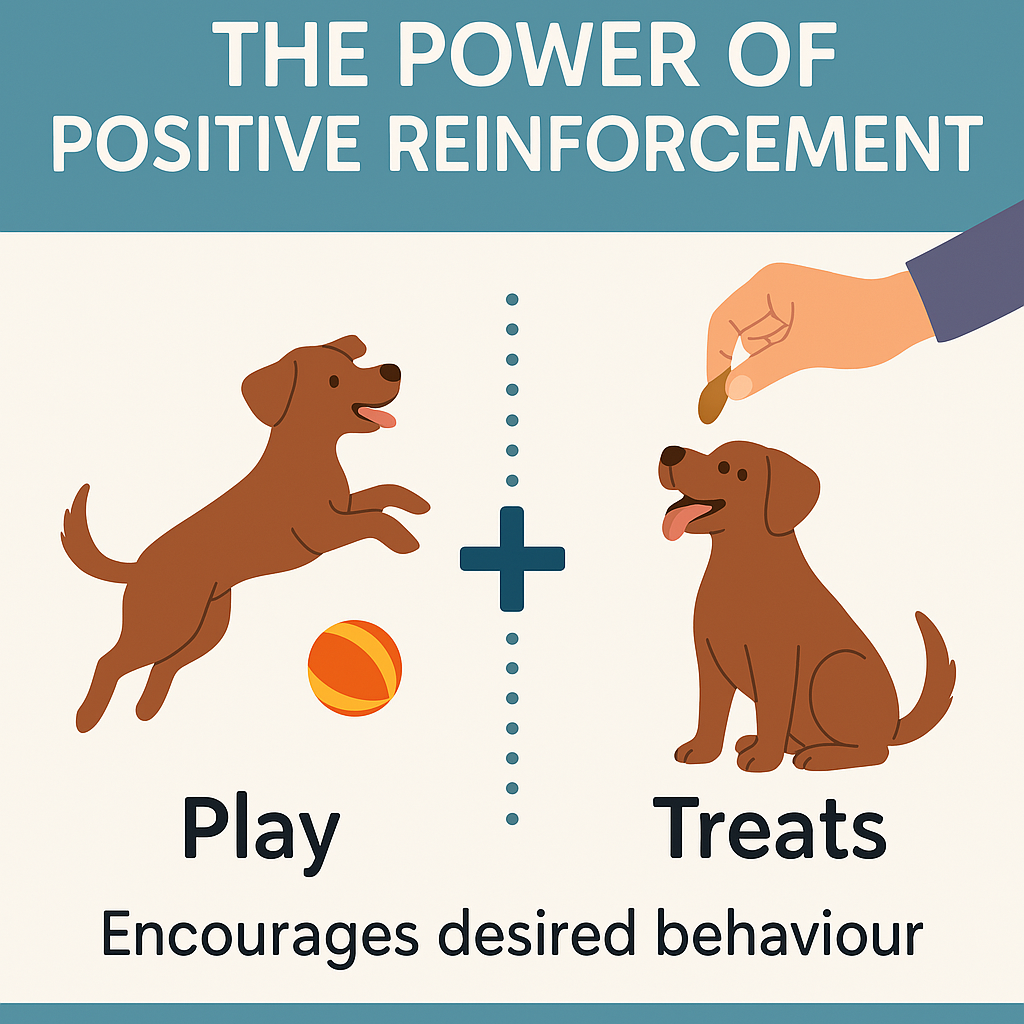
Positive reinforcement means rewarding behaviours you want to see more of. When your dog performs a desirable behaviour and gets something they love in return, they’re more likely to repeat that behaviour in the future.
For example:
When your dog sits politely, they get a treat → They sit more often.
When your dog walks nicely on a loose leash, they get to move forward → They pull less.
When your dog comes when called, they get a fun game → Their recall improves.
Unlike punishment-based methods, positive reinforcement builds trust, enthusiasm, and a love for learning—without fear or stress.
Why Does Positive Reinforcement Work?
1. It makes learning fun – Dogs love rewards, and when training feels like a game, they stay engaged.
2. It strengthens your bond – Your dog sees you as a source of good things, improving your relationship.
3. It builds confidence – Dogs feel safe exploring new skills when they know success leads to rewards.
4. It creates lasting behaviours – Dogs learn best when they associate training with positive outcomes.
Choosing the Right Reward
The best reinforcement depends on your individual dog. Some great options include:
Food Rewards: Tasty treats like chicken, cheese, or dog-safe peanut butter.
Toys & Play: Tug, fetch, or a favourite squeaky toy.
Praise & Affection: Happy voice, cuddles, or a good belly rub (if your dog enjoys them).
Life Rewards: Opportunities like sniffing, going through a door, or greeting a friend.
Pro Tip: Use higher-value rewards for more challenging tasks and distractions!
How to Use Positive Reinforcement Effectively
1. Reward the Right Behaviour Immediately
Dogs learn best when they are rewarded within seconds of the behaviour. Mark the behaviour with a word like “Yes!” or use a clicker before giving the reward.
2. Be Consistent
Reinforce behaviours every time they happen, especially in the early learning stages. Over time, you can phase out treats and replace them with praise or life rewards.
3. Keep Sessions Short & Fun
Training should be enjoyable! Keep sessions 5-10 minutes long, with plenty of breaks to prevent frustration.
4. Set Your Dog Up for Success
Make learning easier by starting in a quiet, low-distraction environment before adding more challenges.
5. Use Reward Timing to Shape Behaviour
Reinforce small steps towards the final goal. If you’re teaching a “down,” you might reward your dog first for lowering their head, then for bending their front legs, and finally for lying down completely.
Common Mistakes to Avoid
Accidentally reinforcing unwanted behaviour – If your dog jumps up and you give them attention, they learn jumping works!
Using rewards inconsistently – If you reward sometimes but not others, your dog may get confused.
Expecting too much too soon – Learning takes time! Celebrate small wins and be patient.
Positive Reinforcement Creates a Willing Learner
Dogs trained with positive reinforcement aren’t just obedient—they’re eager to engage and learn. By focusing on what your dog does right, rather than what they do wrong, you create an environment where learning is exciting, trust is strong, and your dog thrives.
No responses yet